Blogs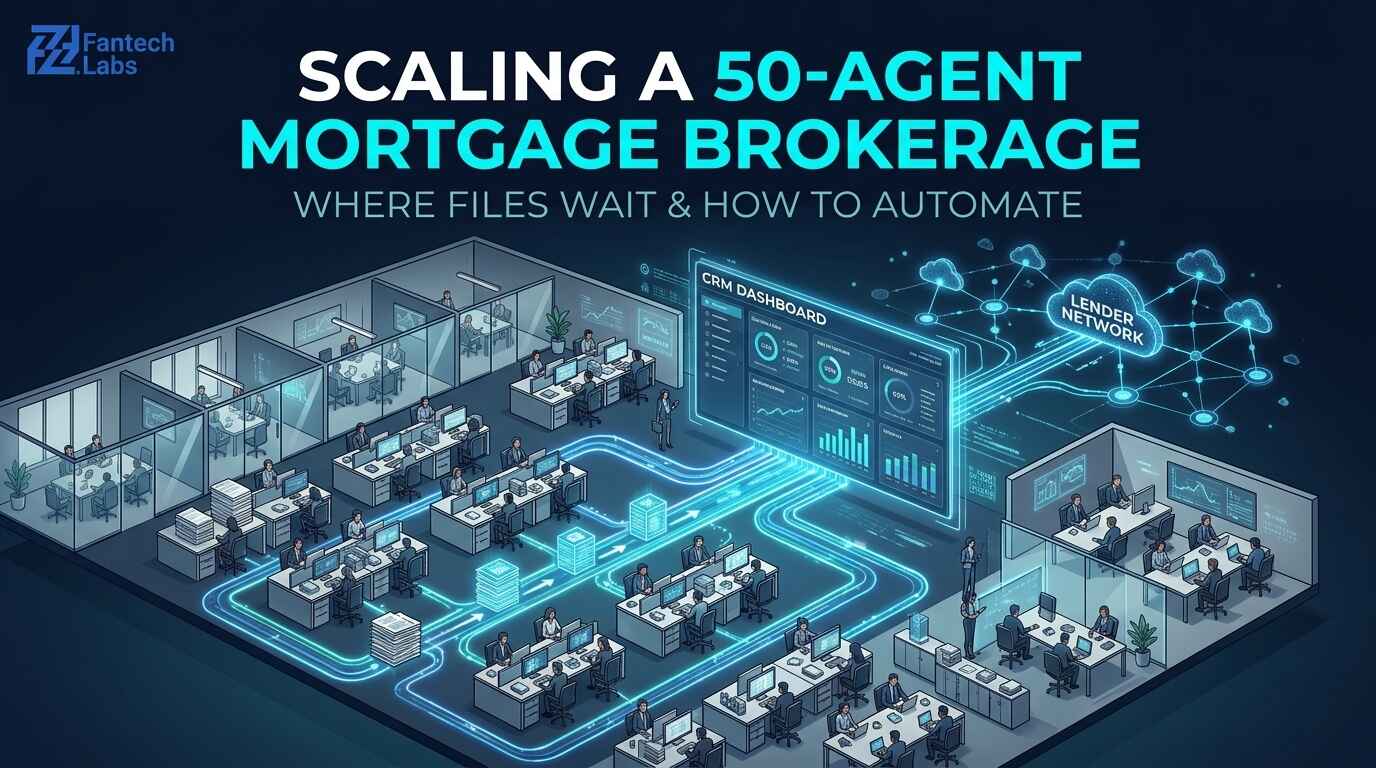
AI automation
How We'd Automate a 50-Agent Mortgage Brokerage
A practical breakdown of the workflows, handoffs, and review points worth automating first in a 50-agent mortgage brokerage.
A practical breakdown of the workflows, handoffs, and review points worth automating first in a 50-agent mortgage brokerage.
Start where files wait, not where the technology looks exciting. In a 50-agent brokerage that usually means document collection, intake, lender matching and status updates first, then follow-ups and reporting. Automate the routine steps between people, keep a person on every decision that affects a borrower or a lender, and connect it to the systems you already use rather than replacing them.
At 50 agents, small differences multiply. Every agent chases documents their own way, files pass through more hands, and nobody sees the whole pipeline at once. A solo broker's habits work because one person holds everything in their head. At this size, that stops working.
The job of automation here is not to make every agent faster at everything. It is to make the routine steps consistent and visible, so the same file gets the same treatment no matter who owns it.

Pick workflows that repeat on every file, follow clear rules, and are easy to check. In most brokerages that gives you this order:
Document collection. One checklist per file, specific requests, and reminders on a schedule.
Borrower intake. One place where borrowers submit information once, instead of the same details being typed into several systems.
Lender matching. Rules that suggest which lenders fit a file, so an agent starts from a short list instead of a blank page.
Email parsing. Lender emails and attachments read and filed against the right file automatically.
Status updates and follow-ups. Borrowers and referral partners hear where a file stands, and stalled leads get a nudge, with consent records kept connected to every message.
Reporting. Pipeline by agent, by stage and by lead source, live instead of built by hand each week.
NuBorrow, a multi-brand mortgage business, needed more than a portal. They were dealing with manual lender matching, CRM data rot, and a borrower intake process that couldn't scale past a certain volume. We built automated lender matching, AI-driven email parsing, a custom borrower portal and real-time pipeline dashboards, all connected to their existing CRM. They went from 10 to 100+ deals a month after automating their CRM, lender matching and client workflows. You can read more in the NuBorrow case study.
Three things are worth taking from it, and they apply to a brokerage of any size:
They kept their CRM. The new pieces were connected to it, not swapped in for it.
It was several workflows, joined up. Matching, intake, email handling and reporting all fed the same system, so a status change in one place showed up everywhere else.
The bottlenecks were intake and matching. Those are the first places to look in your own brokerage.
Every brokerage runs differently, so the right set of pieces depends on what a review of your own workflow finds. NuBorrow is an example of what's possible, not a template.

Automation prepares. People decide. Keep a person on:
Write these review points down and build them into the workflow, so an automated step stops and waits for a person instead of carrying on.

Many brokerages work with agents who run their own business and have their own habits, so the automated path has to be the easiest one. If it takes more effort than the old way, it won't be used.
If you're not sure where your files wait, a Workflow Audit is the quickest way to find out. We map your tools, your handoffs and your bottlenecks, and you get a practical roadmap whether you work with us or not. If something genuinely needs building or connecting, we do that next, as part of our AI automation and CRM integration work.
Yes. Automation can be built on top of the systems you already run, such as Salesforce, HubSpot, Finmo or Velocity, so agents keep working where they already work.
It depends on the workflow and how clean your current process is. The safe approach is one workflow, one pilot team, and a clear measure of success, then expansion from there.
Less than you might expect if the automated path is the easiest one and agents keep control of the decisions. Show them what it takes off their plate, such as chasing and file checking, rather than what it replaces.
Final income decisions, lender selection, anything told to a borrower about eligibility or terms, and exceptions.
Yes. The order is the same, just on a smaller scale. Start with document collection and status updates.
It can be, if consent is tracked, every automated action is logged, and the setup follows the rules in your province or state. Check your setup with your compliance advisor.
The latest industry news, interviews, technologies, and resources.