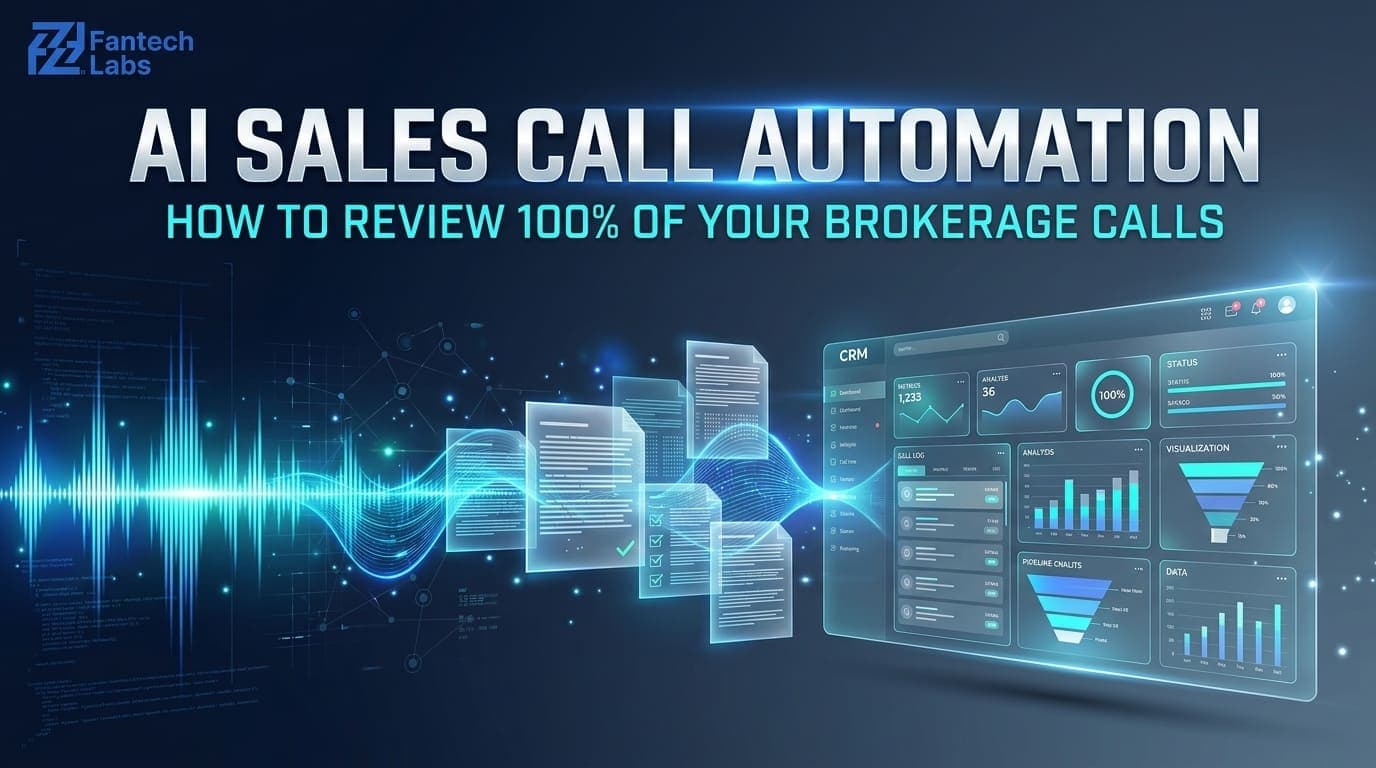
AI can transcribe every sales call, turn it into a summary and next steps in your CRM, check it against a short checklist (required disclosures, key questions asked, promises that shouldn't be made), and spot patterns across hundreds of calls that no manager could listen to. It can't judge tone and context perfectly, and it shouldn't decide anything about a person's job or pay. Use it to find the calls worth a human's time, not to replace the human.
Why Do Most Mortgage Sales Calls Never Get Reviewed?
A sales manager can listen to a handful of calls a week, and that's usually a sample picked by memory or by whoever complained. Coaching ends up based on gut feel. Compliance problems get found late, if at all. And the follow-up after each call depends on whatever notes the loan officer remembered to write.
That leaves a brokerage with hundreds of conversations full of useful information and no practical way to use any of it.
What Can AI Actually Do With a Sales Call?

- Transcribe and summarize. Each call becomes a short note with the borrower's situation, what was agreed, and what happens next. This is one of the most common uses of AI in a mortgage brokerage.
- Create the follow-up. Next steps, like "send document list" or "call back Thursday," become tasks on the file automatically.
- Check against a checklist. Did the loan officer ask about timeline, income type, and how the property will be used? Was the required disclosure given? Did they avoid guaranteeing a rate or an approval?
- Tag what was discussed. Rate questions, fee concerns, refinance versus purchase, document questions.
- Flag calls for a person. A frustrated borrower, a complaint, or a missing disclosure goes straight to the top of the review list.
- Find patterns. Which objections come up most, and where leads tend to go cold.
What Can't It Do (Yet)?
- Hear everything correctly. Rates, loan amounts, and names can get transcribed wrong, especially on poor audio or with strong accents.
- Read tone and relationship. Sarcasm, humor, and a long history with a client can look very different on a transcript than they sounded on the call.
- Know your policies by itself. It only checks what you've actually told it to check.
- Decide whether a call was good. It can say what was and wasn't said. Whether it was the right conversation is still a human judgment call.
A person should review whatever the AI flags, and nobody should be marked down on an automated score alone.
What Should You Check Calls For?
Keep it short. Five to eight items is enough. These are the areas worth covering:
- Compliance. Was the recording notice given? Did the loan officer avoid guaranteeing a rate or an approval? This protects the brokerage.
- Discovery. Did they ask about timeline, income type, and how the property will be used? This leads to better-quality files from the start.
- Next step. Was a follow-up agreed and were documents requested? This means fewer leads going quiet.
- Objections. How were rate, fee, or timing concerns handled? This shows where coaching is actually needed.
- Lead quality. Were there clear signs of intent? This helps decide who to call first.
How Do You Set It Up?
- Write down what a good call actually looks like, a short scorecard built with your best loan officers, not assumed from the outside.
- Sort out recording and notice first. Decide how callers are told, and check the rules for your province or state before anything else.
- Start with one small group, not the whole team.
- Test on 20 to 30 past calls. Have a person review the same calls and compare their findings against the AI's.
- Send summaries and tasks into your CRM, so nothing lives in a separate tool nobody checks. This is where CRM integration matters.
- Review the flagged calls every week, and adjust the checklist as you learn what actually needs catching.
How Do You Keep It Fair and Private?

- Tell callers the call is recorded, in line with the rules where you operate.
- Tell your team exactly what's being recorded and why, before it starts.
- Limit who can listen, and decide up front how long recordings and transcripts get kept.
- Use it for coaching first. People accept review far more easily when it's helping them than when it feels like surveillance.
- Never use an AI score as the only basis for pay, discipline, or a hiring decision.
What Mistakes Should You Avoid?
- Scoring too many things, so the results turn into noise nobody acts on.
- Trusting a score without actually listening to the call it came from.
- Rolling it out without telling the team why it's happening.
- Leaving summaries outside the CRM, where they go stale within a week.
- Treating it as a one-off project instead of a weekly habit.
Where Should You Start?
If you're not sure where call review fits among everything else slowing your team down, a Workflow Audit is the quickest way to find out. We map your tools, handoffs, and bottlenecks, and you get a clear list of what to automate first, whether you work with us or not. Call summaries are one of the common workflows we look at as part of our AI automation work.
FAQ
Can AI review every call, or only a sample?
It can process every call. The practical approach is to let it check all of them and have a person listen only to the ones it flags.
Do I need to tell callers I'm recording?
Recording and notice rules differ by province and state, so check yours with your compliance advisor. In general, tell callers at the start of the call.
Can it score my loan officers?
It can compare a call to a checklist you define. A score should start a conversation or a coaching session, never be the only reason for a decision about someone's job or pay.
Will it work with the CRM we already use?
Usually yes. Summaries and tasks can be sent into systems such as Salesforce, HubSpot, Finmo, or Velocity, so the team keeps working where it already works.
How accurate is the transcription?
It varies with audio quality and accents, and numbers like rates and loan amounts are the most likely to be misheard. That's exactly why a person should confirm anything important before it's acted on.
Where should a small brokerage start?
Start with summaries and follow-up tasks, which help immediately, and add checklist scoring and compliance flags once the team trusts the basics.